ICEBERG R11i01 | ART
ICEBERG R11i01 2006
Art Institute, Chicago, USA
Aluminum tubes, white ABS plastic, and nylon rapid prototyped joints, 3 metal suspension cables
520 x 420 x 300 cm
204 11/16 x 165 5/16 x 118 1/16 ins
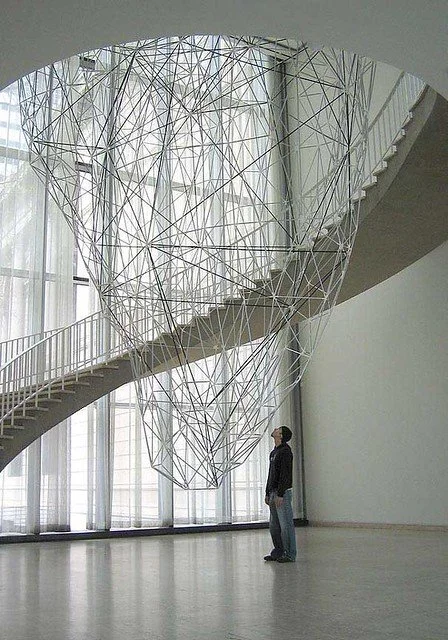
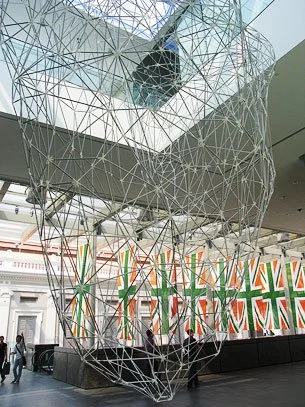
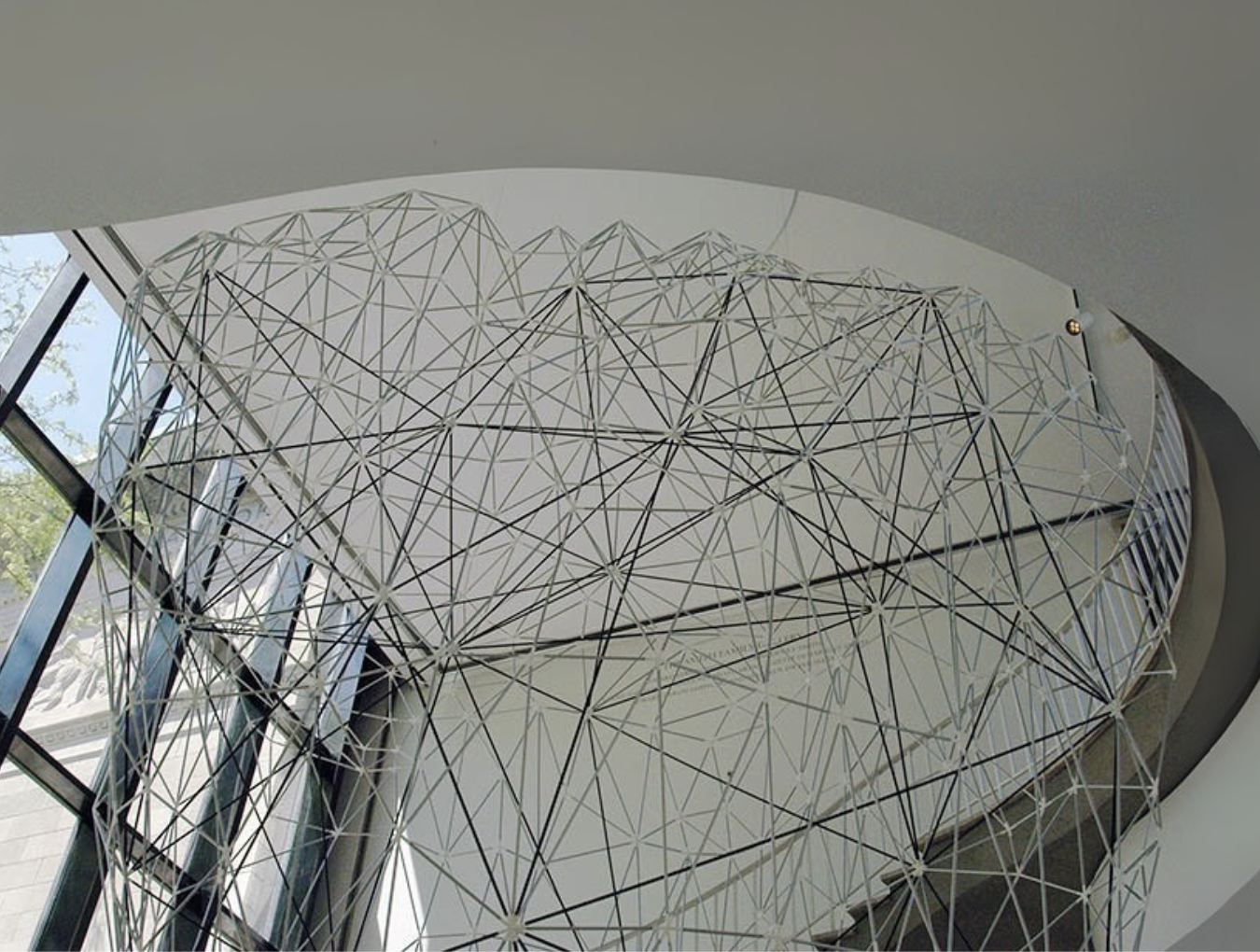
Iceberg (r11i01) is a 30-foot-tall wire-frame sculpture constructed from 1,220 aluminum tubes and 550 unique rapid-prototyped joints, commissioned for a private museum installation.
The work evolved from a body of research grounded in real scientific data: specifically, an iceberg identified as r11i01, which calved from the Greenland ice sheet and drifted through the Labrador Sea toward Newfoundland. At the time of scanning, the iceberg measured 140 meters in height. The sculpture presents a true-to-scale rendering of the submerged portion, offering visitors a rare opportunity to see the massive volume that typically lies hidden below the surface.
Iceberg r11i01 was originally scanned by the Canadian Hydraulic Centre using radar and sonar. With data provided by their scientists, Manglano-Ovalle collaborated closely with Chicago architect Colin Franzen over the course of a year to create a scaled version for The Art Institute of Chicago, where the sculpture was suspended in a stairwell, giving the illusion of it floating in space.
At its conceptual core, Iceberg (r11i01) presents a dramatic tension between modernist utopia and ecological collapse. The work echoes Buckminster Fuller’s geodesic ideal, only to subvert it, collapsing the perfect sphere into the fractured geometry of a melting iceberg. It becomes a potent metaphor for modernism’s failure, translating scientific ambition into a meditation on environmental vulnerability and political fragility.
The piece debuted at the Rochester Art Center in Manglano-Ovalle’s 2006 solo exhibition Blinking Out of Existence, and has since been installed at major institutions including The Art Institute of Chicago.