GRAVITY IS A FORCE TO BE RECKONED WITH | ART & INSTILLATIONS
GRAVITY IS A FORCE TO BE RECKONED WITH 2009
Exhibited 2009–2010 at MASS MoCA)
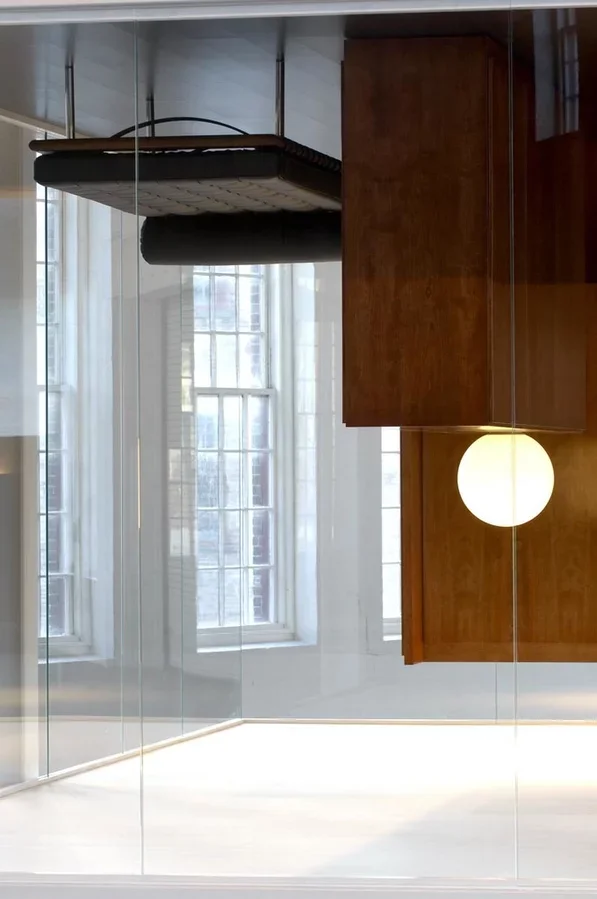
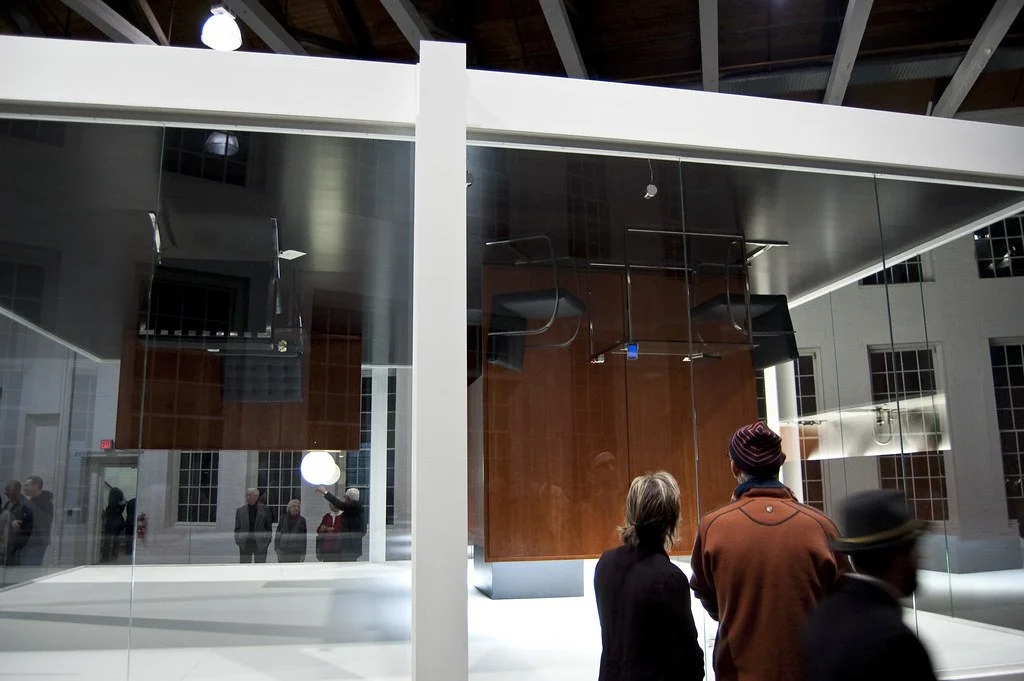
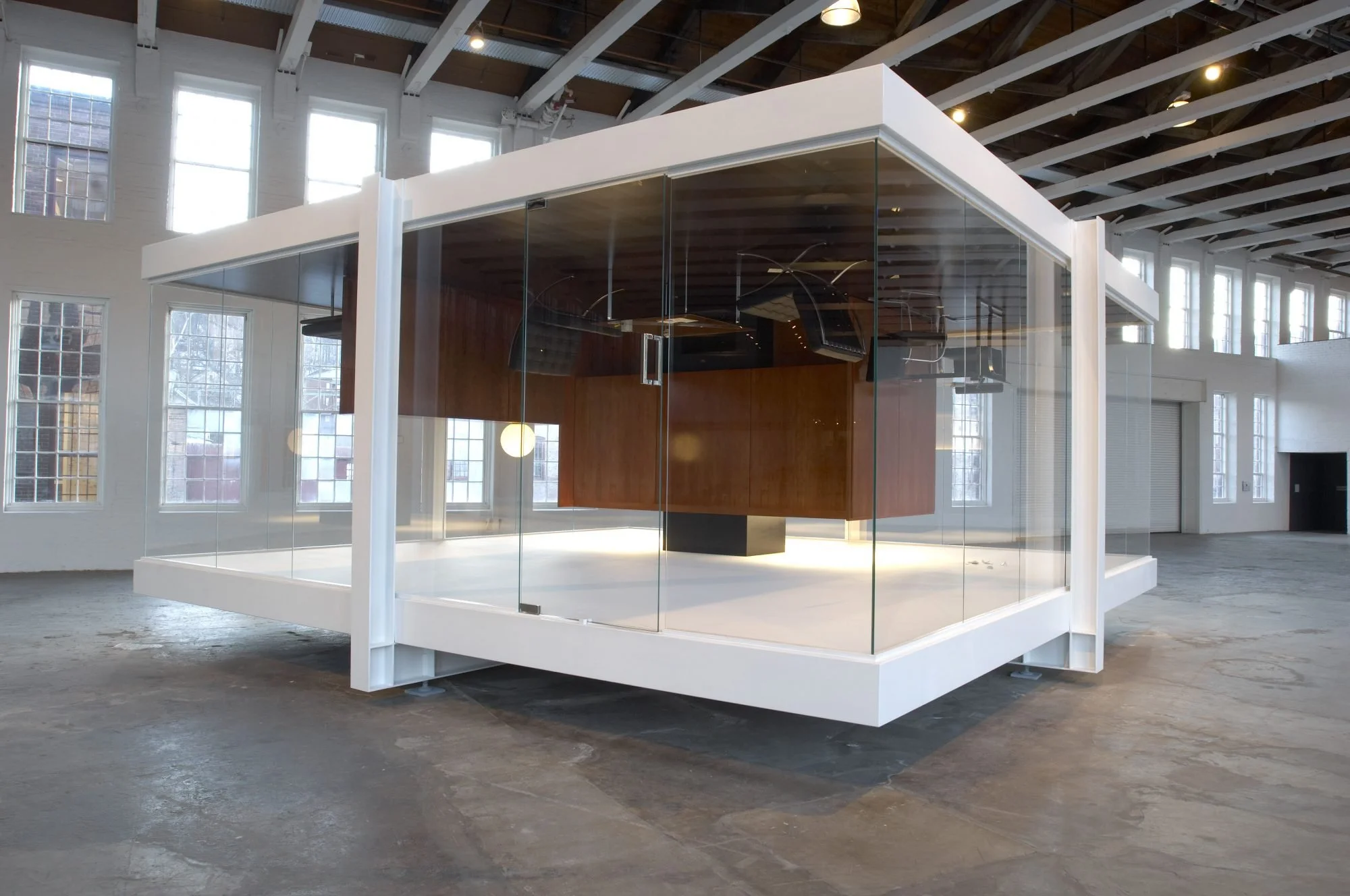
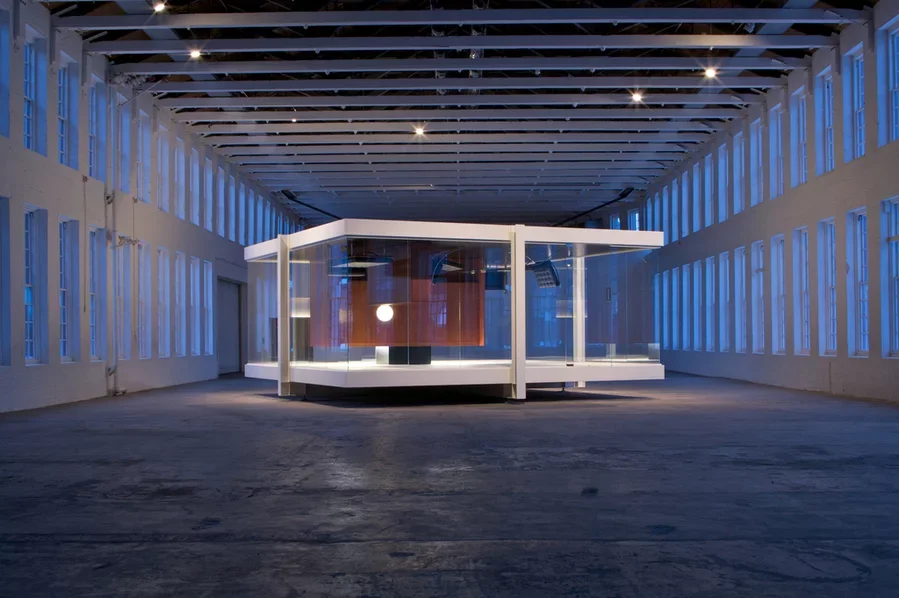
Based on Mies van der Rohe’s unbuilt project House with Four Columns (1951)—a square glass pavilion open on all sides—Iñigo Manglano Ovalle created a striking, inverted half-scale reconstruction that turns architectural purity into conceptual subversion. The house is enclosed in transparent glass panels and flipped upside down: the original ceiling becomes the floor, and the floor becomes the ceiling. Domestic elements—chairs, a couch, even partition walls—are suspended from above, defying gravity and expectation.
This installation is not simply architecture turned on its head—it’s a philosophical inversion. It asks: What cracks emerge when ideal forms collapse? What narratives are buried in the silence of perfect glass utopias? ManglanoOvalle doesn’t use modernist elegance to impress, but to disturb—employing precision and poise to critique the very ideals they once promised.
Inside the inverted cube, a sparse and unsettling scene unfolds: two empty chairs flank a café table. A coffee cup lies shattered—spilled—on what was once the ceiling, now reimagined as the floor. Above, on the inverted tabletop, a phone rings endlessly, looping unreceived video messages. The figure is absent. Communication breaks down. Stillness merges with suspended tension, transforming the space into a meditation on absence, failure, and the brittle fragility of idealism.
Curated alongside the installation is ManglanoOvalle’s film Always After (The Glass House) (2006), shot inside Mies’s iconic Crown Hall at IIT. The film explores the aftermath of utopian transparency—what happens when glass no longer reveals, but fractures; when the dream of perfect clarity gives way to uncertainty and disillusionment.